- 14th Nov 2025
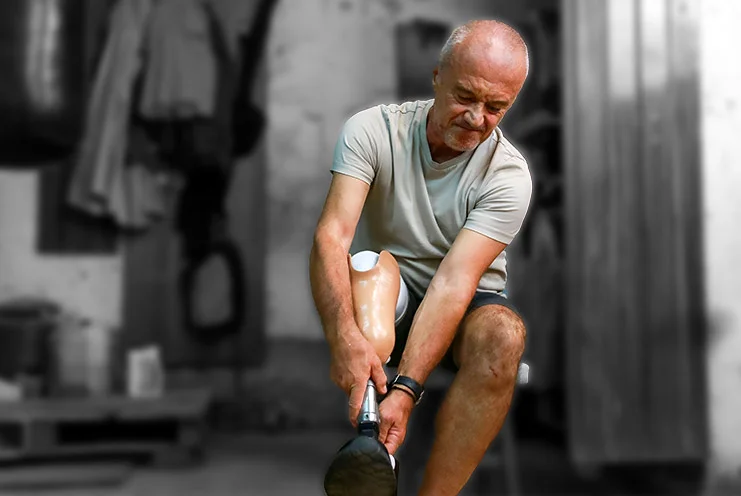
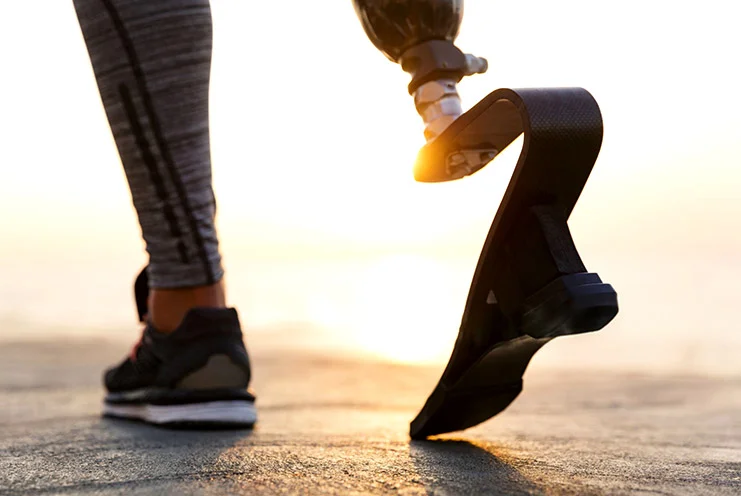
For someone who has lost a limb, walking again isn’t just about movement. It’s about reclaiming rhythm — that quiet confidence in every step. But for many below-knee amputees, what begins as hope often turns into discomfort — pressure, pain, and irritation that remind them they’re wearing something foreign.
This isn’t how it should be. Not anymore.
At Vispala Mobility Clinic, Kolkata, we see this every day — and we fix it, every day. Through advanced materials, 3D printing, and customized socket engineering, comfort isn’t just a luxury; it’s part of rehabilitation itself.
Arun, an engineer from Howrah, remembers the first time he tried his prosthesis.
“It felt like wearing a rock,” he laughs softly now. “The fit was off. I could stand, but walking felt… wrong.”
He had lost his right leg below the knee two years ago due to diabetes. After months of healing, he got a prosthesis made from a local NGO. It looked fine — but the pain began within a few days of wearing it. Irritation. Red marks. Socket slippage. That’s how discomfort turns confidence into fear.
He stopped using it. He began limping with crutches again.
Until one day, he saw a Facebook post from Vispala on Custom socket design.
A prosthesis is only as comfortable as its socket — the part that connects your body to the artificial limb. It bears weight, balances load and protects soft tissue. When the fit isn’t right, problems multiply fast:
Many amputees blame the prosthesis itself — but often, it’s the socket doing the silent damage.
At Vispala Mobility Clinic, our clinical engineers spend hours scanning, modeling, and testing each socket so it feels “second skin” — not an attachment.
So what’s different today from what was available even five years ago? In one word — precision.
If you’re a below-knee prosthesis user and experiencing discomfort, it might not be “normal.” Here are a few signs your socket needs attention:
Even a small alignment change can transform comfort. A refit assessment every 12–18 months is recommended, especially if there’s weight fluctuation or residual limb volume change.
When Arun first walked into Vispala’s clinic, he carried both hope and skepticism. The team scanned his limb, analyzed his stump condition, and built a custom carbon-fiber socket with a gel liner.
When he first wore it, he stood silently for a few seconds. Then he took a step. And another.
This time, no pinching and its light. No uneven pressure. Just quiet, smooth motion.
A few months later, he went back to his workshop. Today, he voluntarily shares his experience with other amputees.
At Vispala, we believe the real prosthesis is confidence. The limb is just a tool. What makes life move again is trust — trust in the fit, in your gait, in yourself.
That’s why our care doesn’t stop at fabrication. Each patient goes through gait training, balance correction, and maintenance education. Because a prosthesis should evolve with you, not against you.
Every prosthesis is engineered, but every story is handcrafted.
If you’re struggling with socket pain, don’t settle for discomfort. A small correction today could mean walking pain-free tomorrow.
Visit Vispala Mobility Clinic, Kolkata, West Bengal for a personalized prosthetic consultation.
Call or WhatsApp to book your free evaluation www.vispala.com/mobility-clinic
Because walking again isn’t the goal — walking without thinking about it is.
Today’s prosthetic foot combine biomechanics, material science, and smart control systems. Whether...
The human foot is a masterpiece of design - 26 bones, 33 joints, and a finely tuned arch that carrie...
The field of prosthetics has undergone transformative advancements in recent years, and one of the m...